FAQ
Questions buyers usually ask before scheduling a Copilot readiness assessment.
Keep the evaluation grounded in scope, speed, multi-tenant fit, and how readiness signals translate into owner-led remediation.
Why is Copilot readiness its own assessment?
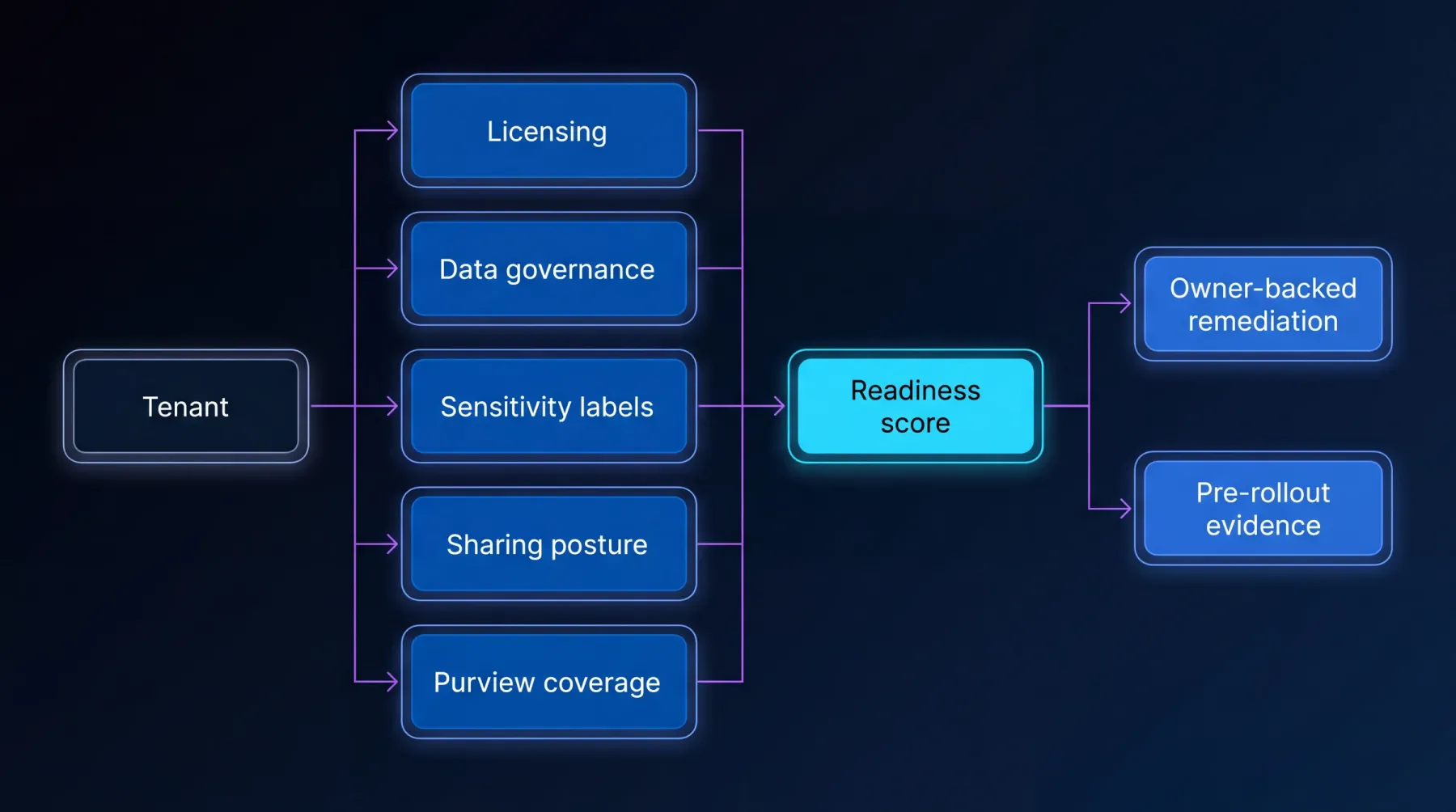
Copilot scores a tenant against a different rubric than a standard security baseline. Sensitivity labels, sharing posture, Purview coverage, data governance, and licensing land together, so it is worth running as a focused assessment in its own right. Readiness work before deployment is faster and less visible than remediation after users are live.
What does it actually check?
Five vectors: Microsoft 365 licensing against intended Copilot users, sensitivity-label coverage and consistency, sharing posture including external access and oversharing drift, Purview sensitivity and retention coverage, and data-governance signals across the tenant. Each finding lands as an owner-backed remediation proposal, not a score alone.
How long does a readiness assessment take?
A focused readiness pass runs in days, not weeks. EtherInsights surfaces the signals across the tenant without a lengthy custom collection phase. The gating factor is usually remediation time, not discovery time.
Can an MSP run this across multiple tenants?
Yes. MSPs run Copilot readiness across customer tenants from one operating view with the same evidence format across reports. That makes multi-customer Copilot conversations easier to schedule and easier to close.
Does EtherInsights remediate or just report?
EtherInsights scores readiness and proposes owner-led remediation with evidence. Tenant-level fixes across labels, sharing, licensing, and Purview are executed by the customer or by an MSP partner. Where remediation needs workflow support, EtherAssist provides joiner, mover, leaver, and controlled change actions to push the work through.